A Beginner’s Guide To Foraging For Food

05/6/09  Print This Post Print This Post    8 Comments   Popular   Written by David DeFranza
    Share

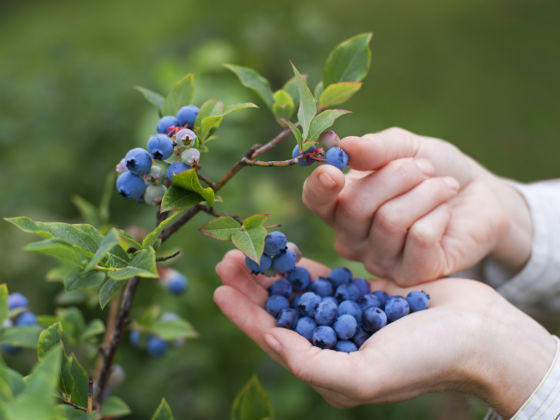
Photo: photo by elizabethboy

David DeFranza digs into the basics of how to find food that is right under our noses.

Foraging, or searching for food, is one of the oldest of human activities. Though we have found more complex ways to assemble a meal, foraging remains relevant today for anyone interested in cheap, locally-sourced, food.

Warning: Foraging Can Be Dangerous

You should not eat any plant, nut, or mushroom you find while foraging unless you are 100% certain of the item’s identification. It’s a good idea to compare your specimen to all similar plants, especially toxic varieties, as well. With that said, foraging can be a perfectly safe and enjoyable activity if you take the time to learn the basics.

Get to Know Your Flora

The first step to foraging is also one of its greatest benefits: You must develop an intimate knowledge of your local flora. Picking up a field guide specific to your area, like one of the Peterson Field Guide series, is a good place to begin. Study what edible plants grow naturally in your area and during what seasons. Once you know what’s out there, you can begin studying the unique characteristics of each plant so you will be able to identify them in the field.

This is not as easy at it may seem. It’s a good idea to seek assistance from someone with experience. Getting started with a mentor is the fastest, safest, way to begin foraging.

Once you’ve done some research, it’s time to search for food.

Photo: photo by ciordia

Head Into the Field

Depending on the season and where you are looking, there is a wide range of edible plants waiting to be discovered. One important thing to remember is that many edible and medicinal plants taste bitter or otherwise unappealing and are only meant to be eaten in emergency and survival situations. Instead of heading out in search of anything and everything you have studied in your field guide, pick one or two things you really want to find.

When looking for plants, remember to stay away from places that are frequently sprayed with pesticides, like railroad tracks and roads, and always wash what you find before eating. When you find something, don’t be greedy: Leave some behind for the animals, birds, and other foragers.

Survival expert Ray Mears gives an excellent demonstration of foraging in the wild in this video:

Head Into the Neighborhood

Foraging is not limited to wild and rural areas. Many urban neighborhoods have fruit, nuts, and other edibles literally waiting to be plucked by pedestrians. Fallen Fruit is an organization that advocates planting an edible urban landscape. They also maintain maps of “public fruit,” or trees whose branches extend off of public property to overhang sidewalks, parks, and other public areas. The fruit growing on these branches can be harvested by anyone so its just a matter of finding the trees.

Find out more about urban foraging and the Fallen Fruit project in this video.

Further Reading

Foraging and plant identification is an art that takes years to master. For a more thorough introduction, try When Technology Fails, Revised and Expanded, by Matthew Stein . Some other classic books about foraging and plant identification include Identifying and Harvesting Edible and Medicinal Plants in Wild (and Not So Wild) Places, by Steve Brill, and The Forager’s Harvest: A Guide to Identifying, Harvesting, and Preparing Edible Wild Plants, by Samual Thayer.

Also, check out this excellent introduction video from the How To Forge:

A world of free, local, food is waiting just outside your doors, so don’t wait: Reap the harvest today.

Community Connection

Interested in other ways you can be doing things DIY? Check out our Life interview with Matthew Stein to learn more about preparedness.


    Share

About the Author

Matador ID: ddefranza

David DeFranza is an editor at large for the Matador Network. He has studied in China, worked in Japan, and wandered all over Asia, Europe and North America.

More By This Author

8 Comments... join the discussion!

  • Tom Gates replied on May 6, 2009

    That Mat Stein book is recommended from this front too. It’s really comprehensive!

    (Report comment)

    ↵ Reply
  • Eva replied on May 6, 2009

    Cool post, David!

    When I lived in the UK, I remember the local tv news airing a blackberry map along with the weather maps. It was a guide to the blackberry-heavy areas of the county — a group of us had a lovely long walk along an empty road one afternoon, stuffing our faces full of berries.

    (Report comment)

    ↵ Reply
  • Tim Patterson replied on May 6, 2009

    Just looking at the mushroom photo in the middle of the post – it doesn’t look edible to me….anybody know what it is?

    In Vermont, we’ve got Hen of the Woods and morels.

    (Report comment)

    ↵ Reply
  • Christine replied on May 6, 2009

    Thanks for the article, David. I know in the San Francisco Bay Area, there are more and more foraging maps being drawn up by different groups.

    Certainly helpful during these economic times, eh?

    (Report comment)

    ↵ Reply
  • Julie replied on May 6, 2009

    I grew up in a rural area and used to forage a bit, mostly for blackberries that grew wild around my house. I’d love to get into some urban foraging. I’ve read about folks here in NYC who forage for wild onions and ginkgo nuts!

    (Report comment)

    ↵ Reply
  • Madison replied on May 6, 2009

    So funny that I read this article after my run where I found (and ate) wild raspberries…..

    (Report comment)

    ↵ Reply
  • Carlo Alcos replied on May 7, 2009

    My brother used to forage for mushrooms where we grew up. Of course, they were of the more hallucinogenic kind, but still…

    This is really cool. Along with tying all sorts of knots, this is one skill I would love to obtain.

    (Report comment)

    ↵ Reply
  • tom gates replied on May 7, 2009

    Good eye Tim…according to Flickr, yes, that’s a deadly mushroom.

    (Report comment)

    ↵ Reply
  • rylos replied on May 27, 2009

    Aw, man. That’s it, I’m gonna make a foraging map of my town this weekend then.

    (Report comment)

    ↵ Reply

Leave a Comment

Get Matador in your inbox and around the web.

Sign up for our FREE weekly newsletter.


View full list of RSS feeds

Jump To Category:


Explore the Community


Popular Stories on Matador

9 Facts About Micro Four Thirds Cameras

Documentary photographer

Dog Meat and Rooster Balls: The 10 Most Exotic Asian Foods

From Indonesian bats to Taiwanese rooster balls, these ... 

How to Be Literary in Paris

We can't all be Maupassant or Colette, but we can have ... 

5 Matadorians to Meet Right Now: The Couples Edition

Two for the road!... 

10 Extraordinary Burial Ceremonies From Around The World

Not all cultures believe in burying the dead in the gro... 

Buenos Aires Binge Eating 101

We gave Tom Gates 24 hours to eat as much as he could s... 

Photo Essay: Wreck Diving in the Great Lakes

Diving in the Midwest isn’t as glamorous as diving in... 

America's Largest Climbing Gym Opens in Atlanta

Stone Summit has over 30,000 square feet of climbing su... 

Essential Gear for the Nomadic Travel Photographer

Are you a serious travel photographer constantly on the... 

Back to Sender

Lola Akinmade is confronted with the energetic survival... 


Focus


Editor Blogs