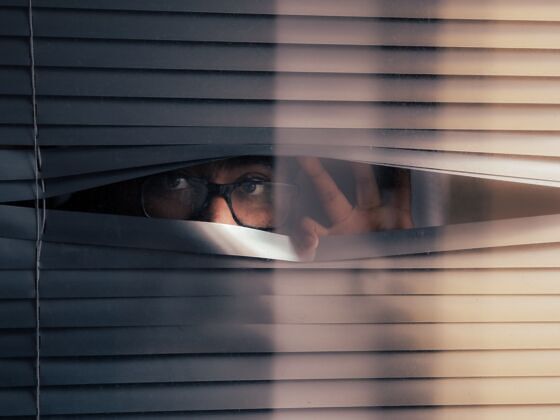
Photo by mr. toaster
You might assume that as Matador’s social media ninja, whenever the topic of social networking comes up, my view is all puppies and rainbows. Most pundits tout all of the benefits of social media, but I do think that as this new media platform evolves and slowly moves mainstream (remember when your grandparents finally got email?), there will be good and bad. Consider:
If you’re off ill from work but busy tending to your virtual garden on Facebook, you could get fired.
You could be sued for complaining about your landlord on Twitter.
Location Based Social Media: It hasn’t happened yet, but isn’t it convenient for your stalkers that you can now be tracked down to exact GPS coordinates?
In case you were wondering, there is an entire website dedicated to robbing people while they aren’t at home. Useful option in the event you’re a thrill seeker or a travel writer without a day job.
How to Stop Freaking Out
So this whole situation started just a few years ago, when Facebook appealed mainly to the college and university crowd. Students posted their drunk party photos on Facebook. Meanwhile, interviewers ran internet searches on potential candidates online only learn more about their underwear brand and which flavor Absolut they preferred.
Now, all your information lies only as far away as the nearest keyboard. Try typing your name into Google and see what you get. Then add to that, the pressure to join and share on any of the many varied social networking platforms. It is difficult to know what you should share and what should be kept private.
Perhaps your late night adventures are an obvious opt-out, but what about everything else?
Guidelines To Navigate Your Social Media Privacy
- If you’re in a precarious situation, social media is not for you. This includes people in the witness protection program (they still have that, right?), have a stalker, a violent or abusive relationship, or have a restraining order out on anyone, then broadcasting updates on social media really is just asking for trouble. Stick to email for now. Is it really worth the risk?
- The so-called protected status updates aren’t as protected as you think they are. If you think your protected Twitter account is private, allow me to follow you, and I’ll retweet your latest update for everyone to see. I’ve even done this by accident. It’s easy to do. Your private LinkedIn profile is viewable to me if I join one of the groups you are in. And ven if I’m not your Facebook friend, I can still see your thumbnail photo and a sampling of people who are your friends.
The Internet works because it is open and it is social. It’s like trying to keep a secret in a room full of people talking – ultimate privacy just isn’t going to happen.
- Decide what’s private and draw the line. You need to know what is private and what isn’t; make yourself a personal policy and stick to it. Here are some examples of my personal policy:
- I typically don’t check in on Foursquare until I’m leaving, if I don’t want anyone to join me. If I don’t want people to know I’ve been there, I don’t check in at all.
- I often talk about my travels, but I never Tweet or update my Facebook status with specific flight name or number until after I have landed on the other side. If someone needs to know, they’ll get an email or Direct Message.
- TwitPics and photos of my family are off limits. My mother is adorable, but she prefers to stay on the sidelines, and I respect that. (Hi mom!)
- I regularly review the privacy settings on my social networking accounts. Facebook privacy, in particular, always seems to be adding additional “features” that you have to opt out of. Frustrating, to say the least.
Photo by albany tim
What’s the bottom line? The decision on what to share on social media is yours and yours alone. Chances are you will not get stalked, fired, or otherwise be exposed by social media, but isn’t it worth taking five minutes to decide and make a personal policy on what’s worth sharing with the world and what is best kept to yourself?
COMMUNITY CONNECTION
How do you protect your privacy when using social media? Are our lives becoming too transparent? Share your thoughts in the comments below.
About the Author
Related Posts
14 Comments... join the discussion!
-
-
Social media has all the rules of being social. If you don’t want anyone to know where you are or where you are going, don’t tell anyone. If something is private don’t post it on a site so the world can see.
If you had a secret you wouldn’t tell it to your loud mouth friend.
Twitter, fb, google, are the big mouths.
The only way 3 people can keep a secret is if 2 of them are dead.
↵ -
I’d also add that, if you have an ex or some other person you may have friends in common with but don’t want in your life at all, facebook might not be for you. I have a coworker who completely flips her shit anytime facebook suggests to her that her ex exists. Yeah, see, this is where the “social” part of social networking comes in.
↵ -
That top picture is tres freaky.
↵ -
A very pertinent issue, Andy, and very useful advice…
my question is, what if you are a freelance writer/have another job that quite literally depends on social media or will at least have your name come up on search engines, and if you have a stalker, etc, what do you do about it?
I’ve had a couple of annoying situations, one of them recent and a bit disturbing.
↵ -
I set personal boundaries pretty early on, out of respect to friends and family who don’t wish to have an internet public life. The choices have served me well.
↵ -
I’m a little concerned that if I ever decide to leave this current job, any new employers will have a field day researching the hell out of me online. With plenty of dirt to dig up, I’m sure.
On the other hand, I don’t know if I’d want to work for people like that. I’m not ashamed of anything I do. I recently blogged about my Amsterdam mistake of eating a space cake, but it was exactly that…a mistake. My personal life is no reflection on how I behave in the professional world.
But there’s never such a clear distinction like that.
↵ -
Leigh, it doesn’t even have to be fraud – something as innocent as a tagged photo of you could help convince a jury that your character is suspect during a legitimate lawsuit. As a whole, drinking at a party is not a big deal, but if you wind up with a conservative jury, a photo of you holding a drink could be your downfall. You can’t always control or anticipate stuff like that so it is just better to be cautious and keep your information private.
I try to keep the mindset that if I wouldn’t want my parents to see it, I don’t post it. I like FB from the aspect that you can set individual privacy settings for photos – I have special groups set up for family and professional colleagues so they cannot see photos I am tagged in or certain albums of my travels.
A number of years ago I found myself a victim of a stalker who found my address through the county we lived in (they post all property ownership records publicly), so I can attest to the importance of maintaining privacy settings (at least for info you can control). He located my address and then followed my post back and forth with a friend on Myspace about being out of town for work training – he showed up at my apt the day I flew back into town. He threatened my life and I filed a restraining order -needless to say my Myspace page went private immediately.
Candice brings up an interesting point if you are a writer or blogger and have an established online presence. Anyone can pretty much search about you without the need for FB or Twitter. Even comments like this end up in Google searches too. Like her, I would not want to work for someone who would judge me based on an event in my personal life like she described. This is where I think the abuse of online information comes in…no one should be denied employment for a post/comment like that.
↵ -
No Leigh, the situation I am referring to is when you sue someone. All the research and dirt digging I did was against plaintiffs who were suing my insureds for an auto accident or a home liability claim. If an individual files a claim or lawsuit, basically be prepared for the intense background digging that might come along with it. Your life will be on display for the world to see. Sometimes it is warranted, sometimes not.
I hope that legislation catches up to social media, but since they are still having issues with catching up to the internet in general, i fear it will be a long time coming. Sadly, most legislation in the US isn’t “made” until someone sues, appeals, and goes through another lengthy couple years in the appellate system before there is a case on point to clarify an existing statute.
And there will always be companies or people who abuse social media. I worked for an employer who maintained a monster account not to solely seek new candidates for work, but to spy on existing employees who might be looking to leave. And they make your life an absolute misery once they determine you might be looking to get out. And this is no small company – it’s a well-known worldwide company. Linked In can be a risk too if you note “looking for job opportunities” on your profile.
I know what you are saying about looking like a pill. There’s an awkward line at company functions where alcohol is involved and it all depends on the company. In one position I worked primarily with men and it wasn’t until I could manage to keep up with their all night drinking at business conferences that I was accepted. They quickly respected me when I was the only one who managed to get up after an hour of sleep and still attend the morning conference itself.
↵ -
As another lawyer, I second this. I see more and more creative filing of status updates in family law. It’s pretty persuasive because it originates from you and it’s been put in public. And, if you didn’t learn anything from Sicko, I’d imagine it has great potential to try and block health insurance claims by suggesting pre existing conditions (“e.g: sore back after that climb!”) or things that may inadvertently exclude you from your travel insurance cover (a significant amount of fine print excludes higher risk activities like surfing). You may be totally innocent and well meaning and still have this kind of stuff thrown at you right when it’s least convenient.
And as much as we all like to think that you can avoid working for companies who would care, your online presence can be a factor AFTER employment for things like promotions and employers who are trying to get a better feel for how you might handle more responsibility. Having a bunch of pictures of yourself trashed online? Off putting for many.
And… dating. Single? Control that profile. Doing otherwise is like showing up to the first date in your most comfortable sweatpants. Yeah, it’s “the real you”, but it’s just one part of the real you and it’s way too much too fast. That fun “cat christmas” album you posted for your aunt and niece may play as weird without appropriate background. Those sad status updates the month after your last breakup may be lurking around making you look… well, sort of unstable.
But, on the flipside, a carefully cultivated online profile can be a great calling card. Showcase your great taste in music, a few shots from far flung locales, or some political/charitable affiliations you really care about. Treat it as an open introduction, not a personal diary.
↵ -
My goodness, I step away for a few minutes and a very interesting conversation has developed.
I had NO idea and had NOT considered these sort of impacts. Wow. Am floored.
I guess if I could summarise my feelings now, I think this is going to get uglier before it gets better. How’s that for positive thinking?
↵ -
As many of us here are freelancers, I think we are particularly vulnerable because we do need that online presence. For many years I did not use my real name or email address for anything. I worked with a particularly creepy person when I lived in Asia who seemed to be up on internet stalking/ making people’s lives a misery. But then I finally realised that I needed to get my work and my name out there in order to get work. I’m very uncomfortable with it all but what can we do apart from keeping everything as neutral as possible and not giving addresses or locations?
↵


