How to Stay Healthy During Flu Season: Adventure Doc Answers Our Questions

01/24/09  Print This Post Print This Post    10 Comments   Popular   Written by Juliane Huang
    Share

Feature photo by Heliøs. Photo above by SuperFantastic.

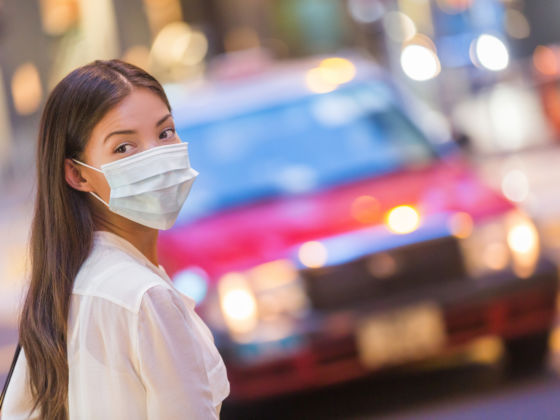
Adventure Doc gives insight as to how best protect oneself during the flu season.


Erik McLaughlin is not your typical doctor.
This family practice resident speaks four languages, attended medical school in England, and aims to focus on expedition medicine in the near future.

With a real passion for taking care of travelers and embarking on adventures in remote locations, he is an adventure doc in every sense of the word.

Matador sat down with the Adventure Doc to pick his brain for travel health advice. Travelers are exposed to a much wider range of viruses and medical situations abroad than domestically, and we wanted to know what advice the Doc had for our readers.

Matador: Does Vitamin C really work?

Vitamin C is relatively well known as having some benefit, although it has yet to be proven in serious medical literature. Lots of people cite many studies on Vitamin C. These studies are often improperly done, have small numbers of participants, and show skewed data.

Interpretation of data is key, as is the source and quality of the research study. Basically, there is no proof of the effectiveness of Vitamin C, but I say, if it makes you feel better, go for it! I still take one gram of Vitamin C every day that I am sick.

Matador: And what about Emergen-C?

I actually drink Emergen-C often. I love the easy packets, great vitamins, and electrolytes. I had a glass earlier today. I also carry it with me in my first aid kit when I travel.

Photo by shareski.

Matador: Why are sports drinks so effective in rehydrating sick people?

The thing about sports drinks is that they contain glucose, which couples with water molecules, helping them get from inside the stomach to the blood stream faster. Thus, dehydration gets treated faster. Sports drinks are the best for dehydration, nausea, vomiting, and diarrhea.

But you don’t need to buy the expensive ones. Some water, a few pinches of salt, and a spoonful of sugar work fine, too.

Matador: Hand sanitizing gel vs. hand washing?

A very good question! There is a bit of an argument in the surgical crowd about this. Both state that the gel and actual hand washing are effective, and I believe they are. But one always tries to be better than the other.

The problem with hand washing is that tap water is not always clean water and definitely not sterile. If I just washed my hands with soap and then rinsed with crappy water, that’s no good.

Personally, I use hand gel when I need to be sterile and try a mix of both when I’m traveling. Either way, washing your hands is the most important thing to prevent infection from colds and the flu. This is proven, retested, and proven again. This is the most important thing I can say about infection prevention.

Matador: How does the flu shot work?

The flu shot is basically a prediction of what several flu strains are going to be the most virulent and pathogenic the next year. Flu shot engineers take into consideration the way viruses change as they shift from continent to continent and spread around the world.

Engineers grow the virus, then inactivate it before administering it to patients so it cannot infect people. Your body recognizes the virus and remembers it so when you encounter it again, your body immediately releases white blood cells to kick some butt! Flu shots do work and should be encouraged.

Photo by rocknroll_guitar.

Matador: Why is it so important travelers get the flu shot?

Viruses mutate as they travel the globe. This is where travelers come into the equation of global disease spread. Influenza is pandemic stuff. Think epidemics that kill millions. The common cold just gives you a runny nose, a 2-3 day fever, and a cough.

The flu kills millions in outbreaks. The early 1900s saw a global pandemic killing millions. This is the fear with the bird flu. Hence the emphasis on travelers getting the flu shot.

Matador: Besides travelers, for whom else is the flu shot essential?

People with medical conditions such as asthma, diabetes, or heart disease should get the flu shot. Anybody who risks being killed from a case of the flu should get a flu shot.

Matador: What is the typical incubation period for the flu virus, and is it possible to combat the flu during this stage?

The incubation period varies depending on the virus, bacteria, or infectious agent. Generally a 2-14 day incubation is common. Fighting off the flu is almost a futile attempt. If you got it, you got it. Like bad body odor, nothing can be done.

The term we use is “symptomatic treatment,” meaning we try to help the runny nose, cough, or fever. But fighting the virus is very tough. Viruses are clever. There are some antiviral medications like Tamiflu that take action against replication of the viruses, thus shortening the duration of the illness.

However, use of antivirals can also increase resistance to the medications, ultimately making them useless.Really, the only things you can do is treat the symptoms and ride it out.

Photo by Augapfel.

Matador: What are some key steps in prevention?

The flu shot may not be in everyone’s lifestyle, but hand washing should be. Hand washing is a very inexpensive and very effective method of prevention. Rest is also key, as lack of rest can lower the immune system.

Additionally, some argue that being properly hydrated prevents tiny cracks in your mucous membranes that will allow viral particles suspended in the air an easy entry portal.

Proper nutrition is also vital. Being fit and healthy lessens your recovery time, makes your immune system stronger, and increases resistance. This is why people with chronic medical problems should get the flu shot.

Matador: What is the number one piece of advice you’d give to travelers in order to avoid the flu?

Travelers are encountering things that they have never seen before – buildings, people, pathogens. Their resistance to simple local illnesses is almost non-existent. Travelers need to be extra cautious as they are encountering things that are new to their body. Hand washing is the most important thing a traveler can do to avoid the common cold while on the road. Proven prevention is hand washing.

Matador: How do you know when it’s time to go see a doctor?

Signs of trouble include fevers not responsive to medication like Tylenol, shortness of breath with cough, changes in the color of mucus. Rashes are also pretty big red flags to me. This is assuming lots of things like the person is a healthy adult, not in a malaria-exposed environment, and has no recent foreign exposures.

Matador: What items does the Adventure Doc pack to stay healthy while traveling?

Ibuprofen or a pain and fever medication like Tylenol, electrolyte powder, and an antihistamine like Benadryl. Ibuprofen can treat pain, fever, inflammation, and much more. It is truly a wonder drug!

Matador: What literature would you recommend for our travelers without medical backgrounds?

Field Guide To Wilderness Medicine, Travel and Tropical Medicine Manual, and Where There Is No Doctor. The best, by far, is the Field Guide to Wilderness Medicine. That should be read by every traveler.

The Adventure Doc hopes to open his own travel clinic in 2009 and is available for internet consultations. Visit his website or contact him through email : adventuredoc@gmail.com.


    Share

About the Author

Juliane Huang

Juliane Huang currently writes for Matador from the beautiful city of San Francisco. With a laptop in one arm and a travel bag in the other, Juliane is rarely at home, though always online. Catch up with her on her blog.

10 Comments... join the discussion!

  • Sarah_Menkedick replied on January 25, 2009

    Excellent article and really helpful! The point about getting enough rest is so true. The few times I've gotten really ill with a flu or cold have been right after a two-three day period in which I was running around like crazy and sleeping a couple of hours a night. I also find that if you exercise a lot, getting enough rest is even more important. If I don't take time to chill out after a long run or a long week of running, I can feel my body aching and I feel irritable and out of sorts.

    (Report comment)

    ↵ Reply
    • JULIANE replied to Sarah_Menkedick on January 27, 2009

      So true! I think people forget to balance rest with exertion. Good rest is super important!

      (Report comment)

      ↵ Reply
  • Beth Whitman replied on January 27, 2009

    The best piece of advice is to be healthy to begin with by eating properly and exercising before you even leave home. People tend to ignore, especially while on vacation, that by going off the healthy "diet" they might follow at home can decrease their resistance to all types of bugs and nasty germs.

    (Report comment)

    ↵ Reply
  • tom replied on January 27, 2009

    Doc – what say you about vaccines? They make me very, very nervous. Especially all of the junk in those flu vaccines.

    (Report comment)

    ↵ Reply
  • Erik replied on January 27, 2009

    Tom–good question and you went right for the money! I love it! The "junk" in vaccines that should be discussed is Thimerosal, which is a preservative used in some vaccines and basically breaks down into mercury, in the body. There are many attempts to link Thimerosal with autism in children. Some great links and more info can be found on these sites:

    http://www.cdc.gov/flu/about/qa/vaxsupply.htm#table“target=”_blank”>http://http://www.cdc.gov/flu/about/qa/vaxsupply.htm#tableCDC 2008-2009 Influenza Vaccine

    http://www.cdc.gov/FLU/ABOUT/QA/thimerosal.htm“target=”_blank”>http://http://www.cdc.gov/FLU/ABOUT/QA/thimerosal.htm CDC Thimerosal and Influenza Vaccine

    http://www.fda.gov/cber/vaccine/thimerosal.htm“target=”_blank”>http://http://www.fda.gov/cber/vaccine/thimerosal.htm FDA and Vaccines containing Thimerosal

    Part 2 below :)

    (Report comment)

    ↵ Reply
  • Erik replied on January 27, 2009

    Efforts have been made to reduce or eliminate Thimerosal from vaccines, in the last 15 years. In fact, last week a good study looked at the specific link between Thimerasol and autism in children and there was no association. http://www.latimes.com/news/nationworld/nation/wire/sns-...target=”_blank”>http://http://www.latimes.com/news/nationworld/nation/wire/sns-...
    So, the most common adverse event associated with the flu vaccine is soreness at the injection site. The risk of adverse events associated with a vaccine should be compared with the risk of the disease its trying to prevent. A good source on all vaccine adverse events can be found here: http://vaers.hhs.gov/default.htm

    Overall, the flu vaccine is very well tolerated and is effective in preventing influenza. Not all vaccines are for everybody, though. Certain vaccines, like Yellow Fever, should be used with caution in immuno-compromised people, pregnancy, etc.

    I hope this helps make a more informed decision on flu vaccines!

    (Report comment)

    ↵ Reply
  • Kelly Rice replied on January 29, 2009

    Thanks for breaking down the science behind the flu shot. So many people I know don't want to take it and it's kind of silly in my mind–it cant' hurt you! Great stuff here :-)

    (Report comment)

    ↵ Reply
  • Neeraj replied on December 12, 2009

    Virus infections are always dangerous and should be avoided to the best possible ways including preventive maintenance

    (Report comment)

    ↵ Reply
  • Elizabeth King replied on August 12, 2010

    you can actually shorten the symptoms of common cold by taking lots of vitamin-c;”-

    (Report comment)

    ↵ Reply

Leave a Comment

Get Matador in your inbox and around the web.

Sign up for our FREE weekly newsletter.


View full list of RSS feeds

Jump To Category:


Explore the Community


Popular Stories on Matador

Could Running Barefoot Be Good For You?

A study published this week suggests that runners who g... 

Seriously Slow: 6 Travelers Who Walked Around The World

Traveling around the world is one thing; walking around... 

Stand-Up Paddle Surfing, Hurricane Style

Beginners, we suggest starting elsewhere.... 

The World's 12 Most Spectacular Houses of Worship

Eva Holland rounds up holy buildings that offer a power... 

Photo Essay: Route 66, The Western Way

Scott Spoleder takes us through Seligman, Peach Springs... 

1% of American Students Study Abroad

Congress acts to improve study abroad opportunities for... 

Notes on Codification and Commodification in Travel Writing

Because codification enables a "common frame of referen... 

Essential Cookbooks for the Culinary Traveler

The fastest way into the heart of a culture might very ... 

6 Ways to Get Great Colors in Your Photos Without Photoshop

#4: Your in-camera white balance is an amazing tool for... 

Essential Gear for the Nomadic Travel Photographer

Are you a serious travel photographer constantly on the... 


Focus


Editor Blogs